
Investing
Long-Term Investing vs Short-Term Trading
A few years ago, I had four monitors set up on my desk, constantly flashing red and green. I was...
• 8 minutes read

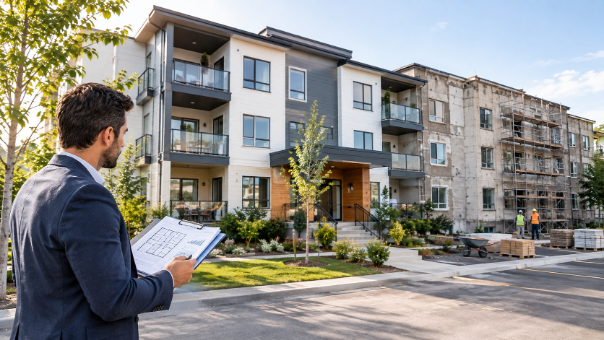
Real estate investing is not always about buying a property and waiting for its value to increase. Sometimes, investors can improve a property's condition, make it more useful, attract better tenants, or increase its income potential. This approach is known as value-add real estate investing.
Value-add investing focuses on identifying properties that have room for improvement. An investor may purchase an older apartment building, renovate an outdated house, improve a commercial space, or make changes that help a rental property operate more efficiently. The goal is to create additional value through careful planning and investment.
For example, an apartment building may have outdated kitchens, poor lighting, and common areas that need attention. By making suitable improvements, the owner may be able to attract more tenants, reduce vacancies, and potentially increase rental income. If the property's income and market appeal improve, its overall investment value may also increase.
However, property improvements do not automatically produce higher returns. Renovation costs, financing expenses, local market conditions, and tenant demand all influence the final outcome. An expensive upgrade may add little value if renters or buyers do not consider it important.
In this guide, we will explain value-add real estate investing, how property improvements work, which upgrades investors commonly consider, how to evaluate costs, and what risks to understand before starting a project.
Value-add real estate investing is a strategy in which investors purchase or own properties that can potentially become more valuable through improvements or better management.
Instead of depending entirely on market appreciation, investors take steps to improve the property's physical condition, income potential, or operating performance.
These improvements can be small or substantial, depending on the property's needs and the investor's budget.
For example, an investor may purchase a residential rental property that has been poorly maintained. The building may have vacant units, outdated appliances, inefficient lighting, or neglected outdoor spaces.
After reviewing the property's condition, the investor creates a plan to address the most important problems. The work might include repairing damaged areas, updating selected interiors, improving maintenance, and making the property more attractive to potential tenants.
If these changes lead to better occupancy, stronger rental income, or reduced operating expenses, the investment may become more valuable.
Value-add strategies can apply to several types of real estate, including:
Residential houses
Apartment buildings
Multifamily properties
Office buildings
Retail spaces
Warehouses and industrial properties
Mixed-use developments
The right improvements depend on the property's condition, location, target tenants, and financial goals.
Property improvements can affect investment performance in several ways. The most suitable strategy depends on whether the investor plans to sell the property, rent it out, or hold it for the long term.
One way to create value is to improve a property's appeal to potential tenants.
For example, an apartment with damaged flooring, old fixtures, and an outdated kitchen may be less attractive than a similar apartment that is clean, functional, and well maintained.
An investor might replace worn flooring, repair plumbing problems, improve lighting, and update selected kitchen features. These changes may make the apartment more competitive in the local rental market.
If tenants are willing to pay more for the improved property, the owner may be able to increase rental income, subject to local market conditions and applicable rental laws.
However, investors should research comparable rental properties before assuming that renovations will justify higher rent.
Vacant properties can create financial pressure because owners may still need to pay property taxes, insurance, utilities, maintenance expenses, and loan payments without receiving rental income.
Value-add improvements may help make a property more attractive and easier to rent.
For example, improving shared hallways, repairing building entrances, maintaining landscaping, and addressing tenant complaints can improve the overall rental experience.
Better management and reliable maintenance may also help retain existing tenants.
Reduced vacancy can support more consistent income, but results depend on tenant demand, competition, pricing, and the quality of property management.
Some improvements focus on lowering the cost of operating a property rather than increasing rent.
Examples include installing suitable energy-efficient lighting, improving insulation, fixing water leaks, upgrading inefficient equipment, and addressing recurring maintenance problems.
These changes may reduce certain utility or repair expenses over time.
For instance, repairing a persistent water leak can prevent water waste and help avoid further damage. Similarly, replacing frequently failing equipment may reduce repeated repair bills.
Investors should compare the upfront cost of an improvement with the expected savings over a realistic period.
An upgrade that costs too much may take longer than expected to recover its cost.
A property in poor condition may attract fewer buyers or tenants and may require more ongoing maintenance.
Addressing important problems can improve its usefulness, appearance, and marketability.
Repairs may include fixing roof damage, improving drainage, replacing unsafe electrical components, repairing plumbing, or resolving structural issues identified by qualified professionals.
These improvements may not always create a visible increase in the property's selling price, but they can help protect the property's condition and reduce the risk of larger problems.
Investors should distinguish between essential repairs and optional cosmetic upgrades when preparing a budget.
Some value-add investors improve a property with the intention of selling it later.
They may update outdated interiors, improve landscaping, repair visible defects, or make the layout more practical.
A clean, well-maintained property can appeal to more potential buyers than one that requires immediate repairs.
However, the amount buyers are willing to pay depends on local comparable sales, market demand, property location, and the quality of the improvements.
Before renovating for resale, investors should estimate the likely selling price using recent comparable properties rather than relying only on asking prices.
Not every property needs a complete renovation. In many cases, targeted improvements can address the most important issues without requiring a large budget.
The following are common areas investors evaluate.
Kitchens often influence how buyers and tenants view a residential property.
Depending on the property's condition, useful improvements may include replacing damaged cabinet doors, repairing countertops, updating handles, improving lighting, or installing suitable appliances.
A full kitchen replacement may be appropriate in some properties, but it can also be expensive.
Investors should consider the expected benefit of each upgrade and compare it with the cost of completing the work.
Bathrooms can affect a property's comfort and overall appearance.
Simple improvements may include repairing leaks, replacing damaged fixtures, improving ventilation, updating lighting, and renewing worn sealant or grout.
More extensive renovations may involve new tiles, showers, or bathroom layouts.
Waterproofing and plumbing work should be handled properly because poor installation can lead to expensive damage.
These improvements can make a property feel cleaner and more modern.
Fresh paint, durable flooring, and suitable lighting may improve the appearance of rooms without changing the building's structure.
For rental properties, investors should select materials that suit the expected level of use and maintenance requirements.
A low-cost material that needs frequent replacement may prove more expensive over time than a durable alternative.
A property's exterior creates the first impression for visitors, tenants, and potential buyers.
Improvements may include repairing pathways, maintaining gardens, repainting exterior surfaces where appropriate, improving outdoor lighting, and repairing damaged fencing.
For apartment buildings, a clean entrance and well-maintained shared spaces can help create a more professional appearance.
Exterior changes should also account for local weather, drainage, safety, and maintenance costs.
Some properties can benefit from upgrades that reduce energy use.
Examples include efficient lighting, improved insulation, weather sealing, suitable heating or cooling equipment, and energy-efficient appliances.
The financial benefit depends on the property's current condition, local energy prices, installation costs, and how much energy the improvements actually save.
Investors should avoid assuming that every energy-related upgrade will pay for itself quickly. Estimates should be based on realistic usage and cost information.
Value-add investing is not limited to construction work.
Improving management can also help a property perform better financially.
Examples include responding to maintenance requests promptly, keeping accurate financial records, reviewing rental pricing, reducing unnecessary expenses, and improving communication with tenants.
For larger properties, a more organized leasing process may help reduce the time units remain vacant.
Better management can improve the tenant experience while helping owners understand the property's true operating performance.
Finding the right property is one of the most important steps in a value-add strategy.
A property with visible problems is not necessarily a good investment. Investors need to understand whether the problems can be addressed at a reasonable cost and whether the improvements are likely to make a meaningful difference.
Start by studying the area where the property is located.
Review recent sale prices, comparable rental properties, vacancy conditions, nearby developments, and the types of properties local buyers or tenants prefer.
A renovation plan should match the market. For example, premium finishes may not be financially sensible in an area where tenants prioritize affordable rent.
A professional inspection can help identify issues that may not be obvious during a viewing.
Important areas include the roof, foundation, drainage, electrical systems, plumbing, heating and cooling equipment, and signs of water damage.
Major structural problems can significantly increase project costs and delay completion.
Investors should also verify property records, permitted uses, ownership details, and any restrictions that may affect planned improvements.
The property should have specific problems that can be addressed through realistic changes.
Examples include outdated interiors, inefficient management, poor presentation, preventable maintenance expenses, or underused space that can legally be improved.
The investor should be able to explain why each proposed improvement matters and how it could affect income, expenses, tenant demand, or resale appeal.
Prepare a detailed budget before making a purchase decision.
Include the acquisition price, inspection fees, legal costs, renovations, permits, financing expenses, taxes, insurance, maintenance, and an allowance for unexpected work.
Then compare the total expected cost with the property's realistic potential value or income.
If the financial result only works under very optimistic assumptions, the investment may carry too much risk.
Investors need to compare the cost of an improvement with the financial benefit it may generate.
For rental properties, this often means examining net operating income, commonly called NOI.
NOI is generally calculated by subtracting operating expenses from property income before debt payments and income taxes.
A simplified formula is:
Net operating income = Rental income − Operating expenses
Operating expenses may include maintenance, property management, insurance, property taxes, and other eligible operating costs. Mortgage payments are generally excluded from NOI.
Consider a simplified example.
An apartment building generates $72,000 in annual rental income and has $32,000 in annual operating expenses.
Its annual NOI is:
$72,000 − $32,000 = $40,000
The investor then spends $20,000 on selected improvements and better maintenance systems. After the improvements, annual rental income rises to $78,000 and operating expenses increase to $33,000.
The new NOI is:
$78,000 − $33,000 = $45,000
The annual NOI has increased by $5,000.
To calculate a simple return on the $20,000 improvement cost, divide the additional annual NOI by the improvement cost:
$5,000 ÷ $20,000 × 100 = 25%
This represents a simplified annual increase in NOI equal to 25% of the improvement cost.
It is not a complete investment return calculation. It excludes factors such as financing, taxes, unexpected capital expenses, changes in occupancy, and the time required for the improvements to produce results. The increase in income is also hypothetical, not guaranteed.
The example demonstrates why investors should measure financial results rather than judging improvements only by their appearance.
Capitalization rate, commonly called cap rate, is a measure used to compare a property's annual net operating income with its market value or purchase price.
The basic formula is:
Cap rate = Annual NOI ÷ Property value × 100
Suppose a property generates $50,000 in annual NOI and is valued at $625,000.
Its cap rate would be:
$50,000 ÷ $625,000 × 100 = 8%
If property income increases while operating expenses remain under control, the property may become more attractive to investors.
In some income-producing property markets, a higher sustainable NOI can support a higher property value. However, market capitalization rates are not fixed, and property values also depend on location, risk, financing conditions, building quality, and buyer demand.
Investors should not assume that an increase in NOI will automatically produce a proportional increase in market value.
A property's value should be estimated using appropriate market evidence and professional valuation methods when necessary.
Imagine an investor purchases a small apartment building for $500,000.
The building has outdated shared areas, several units that need cosmetic improvements, and maintenance issues that affect its appeal.
After reviewing the property, the investor develops a plan to improve selected units, repair common areas, address recurring maintenance problems, and improve the leasing process.
The following is an illustrative budget.
| Expense | Estimated cost |
|---|---|
| Property purchase | $500,000 |
| Interior improvements | $35,000 |
| Common-area repairs | $10,000 |
| Professional and closing costs | $12,000 |
| Financing and holding costs | $15,000 |
| Contingency allowance used | $8,000 |
| Total investment cost | $580,000 |
After the work, the investor hopes to attract tenants more consistently and improve rental income.
Suppose the property generates additional annual NOI of $12,000 after the improvements. This could help strengthen the property's operating performance.
However, the investor must compare the actual results with the original plan. The additional income may be smaller than expected, expenses may increase, or vacancies may continue.
The property might also sell for less than anticipated if the local market weakens.
The lesson is that a value-add plan should be based on realistic estimates, and its success should be measured using actual costs and results.
Value-add projects can be financed in several ways. The appropriate option depends on the property's condition, the amount of money required, the investor's financial position, and the planned exit strategy.
Investors may use personal funds to purchase a property or pay for improvements.
This approach can reduce borrowing costs and provide more control over the project. However, it also ties up personal capital and may leave less money available for unexpected expenses.
Some investors use conventional mortgages to finance eligible property purchases.
Approval requirements depend on the lender, property type, borrower qualifications, and intended use of the property.
Investors should confirm whether the loan permits the planned renovation work and whether additional financing will be needed for improvements.
Specialized financing may be available for properties that require substantial work.
Some loans cover the purchase and approved renovation expenses, while others cover only part of the project.
Investors should review interest rates, fees, repayment terms, fund-release requirements, and the consequences of delays.
A private investor or business partner may contribute money toward a value-add project in exchange for interest, a share of profits, or another agreed arrangement.
The agreement should clearly explain responsibilities, ownership rights, financial contributions, and how losses will be handled.
For any major project, professional legal and financial advice can help investors evaluate the terms before committing.
Although value-add investing can create opportunities, it involves several risks that investors should understand.
Contractors may discover hidden problems after work begins. Material prices can change, and additional repairs may become necessary.
Investors should arrange inspections, obtain detailed estimates, and maintain a reasonable contingency reserve.
Tenants do not always pay more for upgraded features.
The financial benefit depends on the local rental market and whether the improvements address something tenants actually value.
Research comparable properties before assuming that a renovation will justify higher rent.
Even a well-improved property can lose market value if local conditions weaken.
Changes in employment, interest rates, supply, buyer demand, or financing availability can affect the price investors are willing to pay.
Avoid relying solely on future appreciation to make an investment profitable.
Interest, fees, and repayment obligations can make a project more expensive than expected.
Investors should calculate the complete financing cost and understand how the loan affects cash flow.
Renovation work may take longer than planned because of permits, contractor availability, material shortages, or unexpected repairs.
A delayed project may postpone rental income or a planned sale while expenses continue.
A realistic schedule and financial reserve can help manage these risks.
Investors sometimes spend more on renovations than the local market can support.
High-end finishes may not generate enough additional rent or resale value to justify their cost.
Improvements should fit the property's location, target tenant or buyer, and expected financial benefit.
A structured plan can help investors make better decisions throughout the project.
First, establish the investment goal. Decide whether the main objective is to increase rental income, reduce operating costs, improve resale appeal, or prepare the property for a future sale.
Second, prioritize improvements based on their likely impact. Address safety concerns, structural problems, and essential repairs before focusing on cosmetic changes.
Third, prepare a complete budget and timeline. Include contractor payments, financing expenses, permits, inspections, and a contingency allowance.
Fourth, monitor spending and progress regularly. Compare actual expenses with the original estimates and investigate unexpected changes early.
Fifth, measure the results. For rental properties, review occupancy, collected rent, maintenance expenses, and NOI. For properties being sold, compare actual offers and selling costs with the original financial projections.
Finally, remain flexible. If the market changes or renovation costs become too high, reassess the plan instead of continuing simply because money has already been spent.
Value-add investing can be suitable for beginners who are willing to research the market, learn basic property analysis, and manage projects carefully.
However, beginners should not assume that every property needing repairs represents a good opportunity.
A smaller project with manageable improvements may be easier to understand than a large building requiring major structural work. Even small projects need accurate budgeting and a clear understanding of local property values.
New investors should learn how to estimate renovation expenses, compare similar properties, calculate NOI, and evaluate financing terms before committing significant funds.
It may also be helpful to work with qualified inspectors, contractors, property managers, and real estate professionals.
Most importantly, investors should maintain enough financial flexibility to manage unexpected repairs or delays.
Value-add real estate investing focuses on improving a property's condition, income potential, or operating performance to create additional value.
Improvements may include renovating kitchens and bathrooms, repairing building systems, reducing energy waste, improving shared spaces, or managing rental properties more effectively.
When selected carefully, these changes may increase rental income, reduce certain expenses, improve tenant demand, or make a property more attractive to buyers. However, the results depend on the cost of the work, local market conditions, and the quality of project management.
Before starting a value-add project, investors should identify the most important improvement opportunities, estimate the complete cost, and compare potential benefits with the money required.
They should also consider financing expenses, project delays, tenant demand, and the possibility that property values may decline.
Real estate investing involves risk, and returns are never guaranteed. Careful research, realistic financial calculations, and a well-organized improvement plan can help investors make more informed decisions about value-add opportunities.
A few years ago, I had four monitors set up on my desk, constantly flashing red and green. I was...
• 8 minutes read

Years ago, I used to think the stock market was a playground reserved exclusively for guys in tailored suits who...
• 6 minutes read
Construction Financing Explained: Funding Real Estate Projects From the Ground Up Construction financing is an important part of real estate...
• 14 minutes read